Filtered Dimension Extraction for Lift Manufacturing
Extracting dimensions with abbreviations filtering and confidence-scored outputs from engineering drawings at scale.
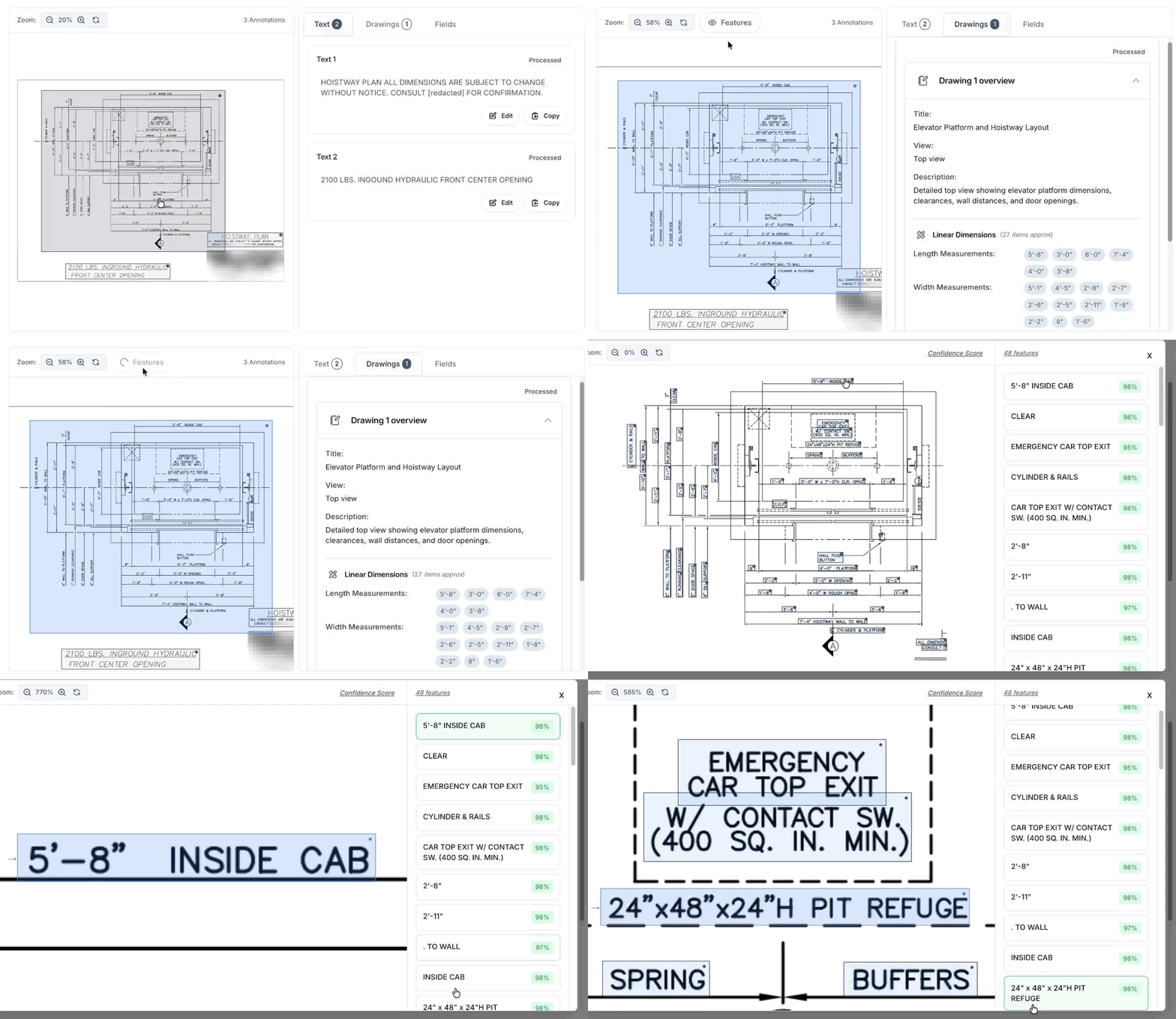
The Problem
Mixed Document Formats
Engineering teams received both digital AutoCAD-generated PDFs and scanned client PDFs. Each format required different handling, and inconsistent quality affected extraction reliability.
Manual Dimension Identification
Identifying dimensions with correct abbreviation suffixes demanded significant interpretation time. Engineers located target dimensions, interpreted abbreviation conventions, and extracted related tabular data manually.
Scale Constraints
Manual workflows could not handle peak volumes of 200 drawings per day without adding headcount. Processing capacity was constrained by available engineering hours.
Integration Friction
Extracted data needed structuring for ERP and planning workflows. Manual transcription into required formats introduced errors and delays in downstream processes.
The Road to Implementation
We deployed an on-premise AI pipeline to extract filtered dimensions from manufacturing drawings, processing both digital and scanned PDFs through a single workflow with confidence-scored outputs.
Document Analysis
Analysis of sample drawings across formats, identifying abbreviation conventions, layout patterns, and quality variations to inform extraction configuration.
Pipeline Configuration
Configuration of on-premise AI pipeline for lift manufacturing drawing characteristics, including dimension formats and table structures.
Output Standardization
Design of two-sheet Excel templates (Drawing Dimensions and Tabular Data) matching downstream ERP and planning system requirements.
API Integration
Integration of real-time extraction API with existing engineering systems, enabling automated document submission and result retrieval.
Custom Architecture Built
Intelligent Abbreviation Filtering
The system extracts only dimensions matching target suffixes (WW, WD, SS, HT), eliminating irrelevant data automatically and reducing downstream processing.
Table Correlation
Associated tabular data is extracted and linked to corresponding dimensions in one pass, preserving relationships between measurements and specifications.
Confidence-Scored API Output
Real-time API returns confidence scores with each extraction, enabling QC teams to focus review on lower-confidence results rather than checking everything uniformly.
The Outcome
80-90% reduction in manual effort per drawing
Processing capacity scaled to 200 drawings per day at peak
Consistent two-sheet Excel output for every extraction
Both digital and scanned PDFs processed in single workflow
QC efficiency improved through confidence-based review prioritization
Direct integration with ERP and planning systems achieved
Automate Your Dimension Extraction Workflows
Ready to see how Adeos can streamline your engineering document processing?
Browse More Success Stories
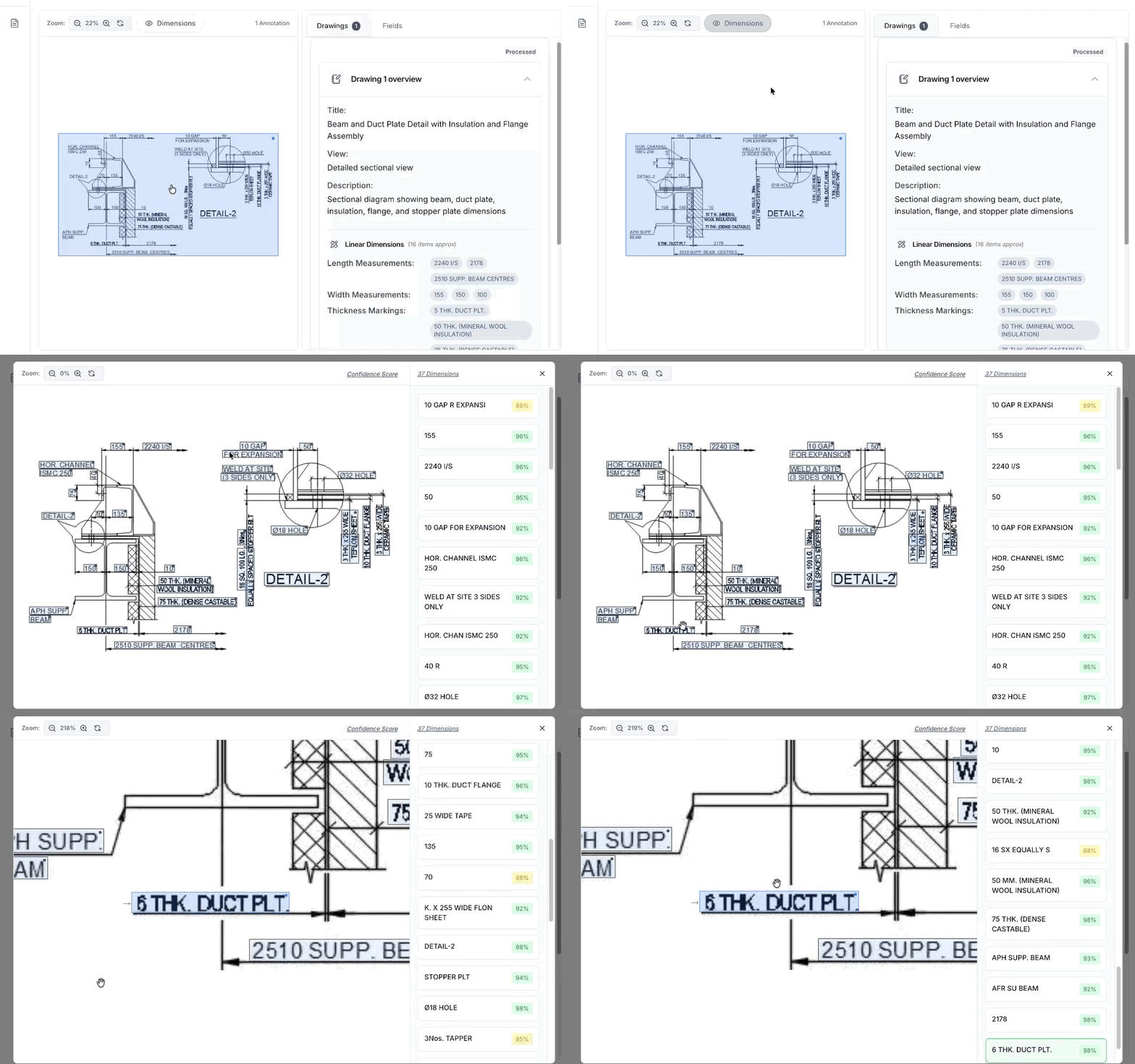
Dimension Extraction and Welding Calculations for Power Boiler Manufacturing
Replacing manual drawing review across departments with automated extraction and formula-driven calculations for supercritical boiler fabrication.
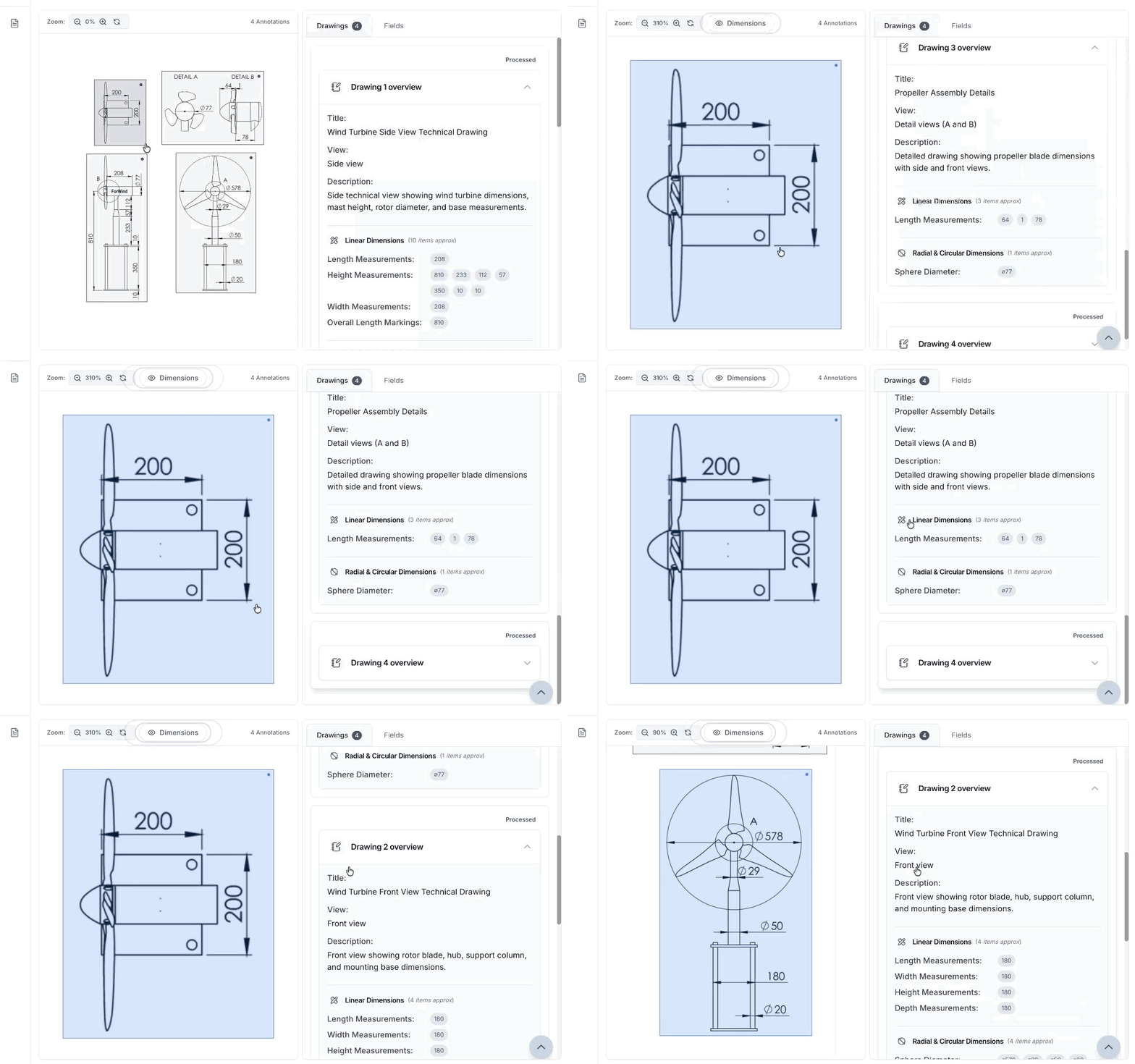
Dimension Comparison Between Customer Drawings and Recreated CAD Files
Comparing customer-supplied drawings with internally recreated CAD drawings, reducing manual verification from hours to minutes.
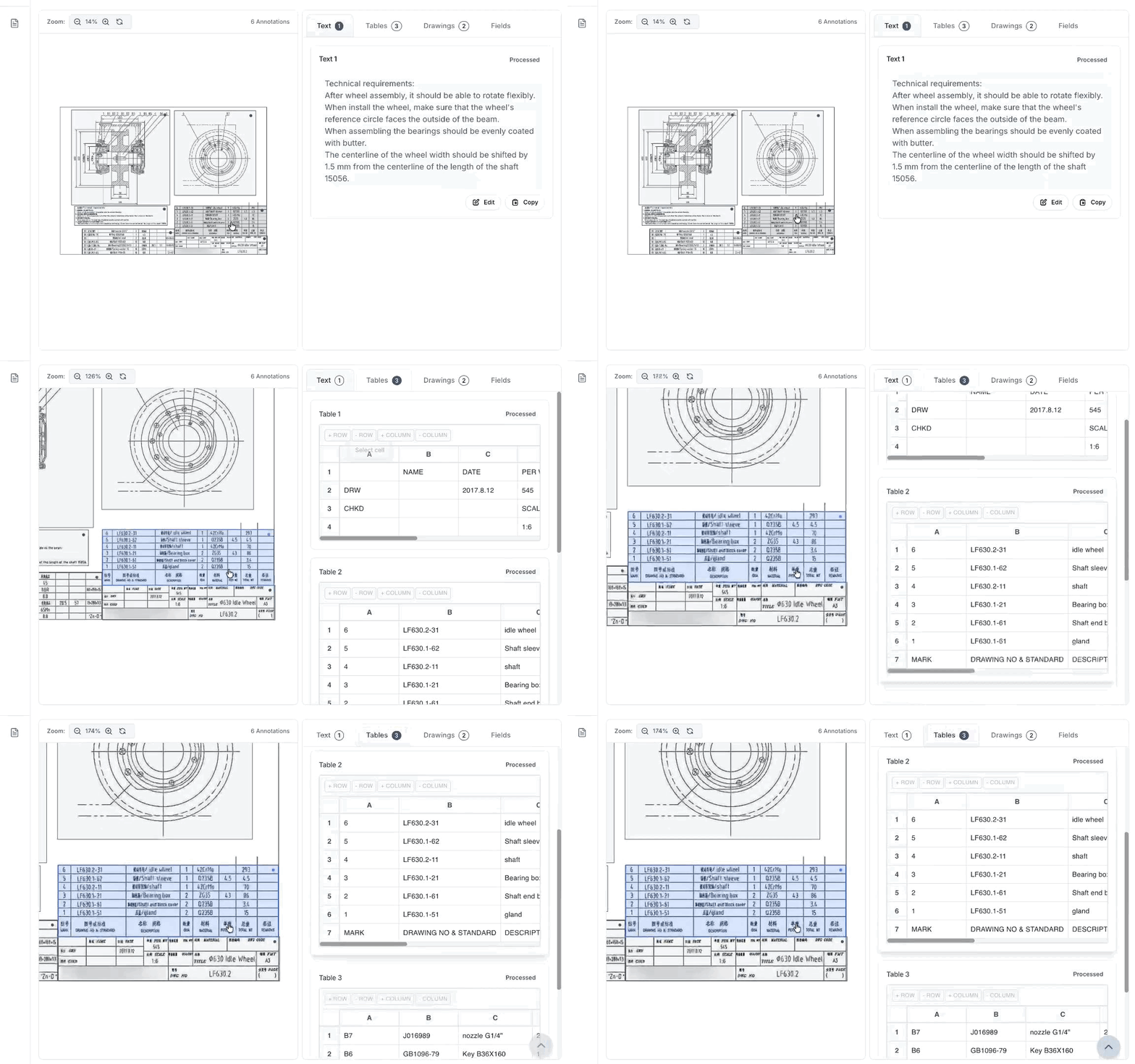
Adeos Marine: BOM Extraction Across a Global Fleet
Transforming weeks of manual data entry into a 48-hour automated workflow for bill of materials extraction from legacy marine manuals.